The Quiet Giants: A Framework for Finding Blockchain Projects Worth Holding for the Next Decade

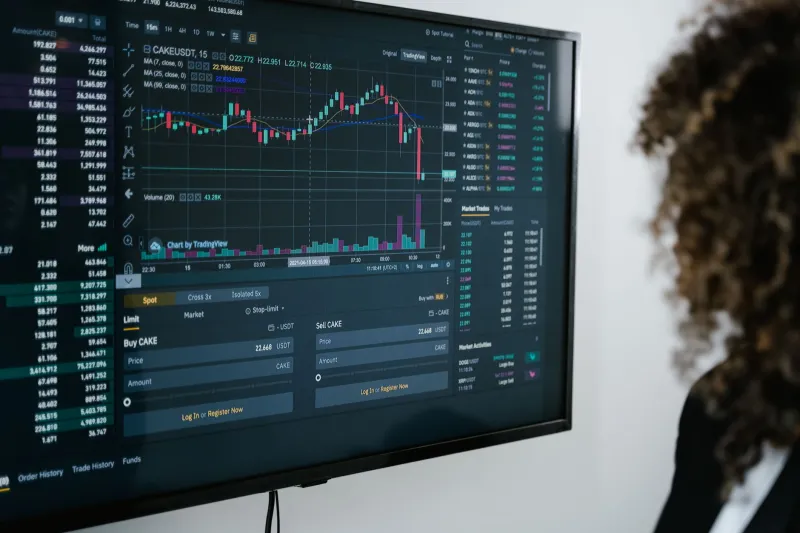
Photo: researcher analyzing blockchain data charts on multiple computer screens, via thumbs.dreamstime.com
There's a certain comfort in owning Bitcoin. The thesis is simple, the community is enormous, and even your skeptical brother-in-law has probably heard of it. Ethereum isn't much harder to explain. But if you're genuinely thinking in 10-year timeframes — which is exactly the mindset that belongs in HODL Valley — then limiting your research to the two biggest names might mean leaving serious upside on the table.
The most life-changing crypto returns in history didn't come from buying Bitcoin at its all-time highs. They came from identifying conviction-worthy projects before the rest of the market caught on. That's still possible today — but it requires a fundamentally different research process than most retail investors use.
Why "Under the Radar" Doesn't Mean "Risky Junk"
Let's clear something up immediately. When we talk about overlooked blockchain ecosystems, we're not talking about meme coins, anonymous dev teams, or projects with whitepapers that read like they were written in an afternoon. Those are traps, and they'll always be traps.
We're talking about legitimate Layer 1 and Layer 2 networks, infrastructure protocols, and application-layer projects that have real developer activity, genuine user adoption, and coherent economic models — but haven't yet captured mainstream narrative attention. These projects exist in a sweet spot: mature enough to evaluate seriously, early enough that their full potential isn't priced in.
The key is knowing what to look for.
Pillar One: Developer Activity as a North Star
Code doesn't lie the way marketing does. One of the most reliable early signals of a project's long-term viability is consistent, growing developer activity.
GitHub is your friend here. Look at how many developers are actively committing code to a project's repositories. Is the activity consistent or sporadic? Is the core team responding to issues and pull requests? Are outside developers contributing, suggesting a genuine ecosystem rather than a closed shop?
Electric Capital publishes an annual Developer Report that tracks developer activity across hundreds of blockchain ecosystems. It's one of the most useful free research documents in the space and a great starting point for identifying where serious technical talent is concentrating.
Projects with growing developer communities tend to ship better products, attract more users, and survive market downturns better than those with thin technical benches. If the builders are still building during a bear market, that tells you something important about conviction.
Pillar Two: Real Adoption — Not Just Total Value Locked
Total Value Locked (TVL) became a popular metric for evaluating DeFi ecosystems, but it's increasingly easy to game and increasingly poor at capturing genuine adoption. A project can have high TVL driven almost entirely by mercenary yield farmers who will leave the moment incentives shift.
Better signals of real adoption include:
Daily active addresses — Are actual users transacting on this network regularly, or does activity spike only during token launches and promotions?
Fee revenue — Is the network generating meaningful fees from genuine economic activity? A protocol that earns real revenue from real users has a fundamentally different foundation than one burning through token emissions to simulate activity.
Non-financial use cases — Chains with applications in gaming, supply chain, identity, or creator economies often have stickier user bases than pure DeFi plays, because the utility isn't purely financial.
Enterprise or institutional partnerships — These move slowly, but when a Fortune 500 company or a government agency builds something on a particular chain, it signals a level of due diligence and long-term commitment that retail enthusiasm alone can't provide.
Pillar Three: Tokenomics That Don't Punish Long-Term Holders
This is where a lot of otherwise promising projects fall apart. Token economics — how a project's native token is created, distributed, and used — can either align with long-term holders or work directly against them.
Red flags to watch for:
- Massive team and investor allocations with short vesting periods (insiders dumping on retail)
- Inflation rates that dilute holders faster than adoption can absorb
- No clear mechanism connecting network usage to token value
- Token supply that's effectively controlled by a small group
Green flags worth seeking out:
- Clear deflationary mechanisms or supply caps
- Meaningful token utility beyond speculation (governance, fee payment, staking with real yield)
- Vesting schedules that keep team incentives aligned with long-term price performance
- Community treasury structures that fund ongoing development without centralized control
Spending an hour reading a project's tokenomics documentation — not just the headline numbers but the actual mechanics — can save you from investments that look exciting at launch but structurally reward early insiders at everyone else's expense.
Pillar Four: The Ecosystem Flywheel
The most durable blockchain projects don't just have one killer app — they have ecosystems where multiple applications reinforce each other. Ethereum's dominance wasn't built on a single protocol; it was built on a sprawling ecosystem of DeFi, NFTs, DAOs, and infrastructure that created compounding network effects.
When evaluating a newer or mid-cap chain, ask: Is there a flywheel starting to spin here? Are developers building applications that bring users, and are those users attracting more developers? Or does the ecosystem feel like a collection of disconnected experiments?
Chains that have managed to develop genuine ecosystem flywheels — even at smaller scale than Ethereum — tend to be far more resilient than single-application blockchains, regardless of how impressive that single application might be.
Building Your Watchlist: A Practical Starting Point
Research ecosystems rather than individual coins first. Look at Layer 2 networks scaling Ethereum, alternative Layer 1s with distinct technical approaches, and infrastructure protocols that serve multiple chains. Understand what problem each one is actually solving and whether that problem is real and growing.
Allocate research time before capital. Spend at least a few weeks following a project's community, reading their development updates, and understanding their roadmap before committing anything meaningful. The best long-term holds are ones where your conviction is built on substance, not momentum.
Size positions to match conviction level. A project you've deeply researched and genuinely believe in deserves a meaningful allocation. Something you're still learning about warrants a smaller starter position. Both are fine — the mistake is treating speculation like conviction or vice versa.
The Decade-Long Mindset Changes Everything
When you're genuinely thinking in 10-year windows, short-term price noise becomes almost irrelevant. What matters is whether the project is still building, still growing its user base, and still solving a real problem five years from now.
That lens filters out an enormous amount of noise and sharpens focus on the things that actually predict long-term success: technical quality, community health, real-world utility, and sound economics.
The quiet giants of the next decade are being built right now, mostly outside the spotlight. The framework for finding them isn't complicated — it just requires patience, rigor, and the willingness to do homework that most casual investors skip.
That's exactly the kind of edge that belongs in HODL Valley.